Docs that don't fall behind the code.
When a release adds something your docs don't cover, DevRelay drafts the missing section as a Markdown diff: a heading, a short explanation and the code example from the change. You review it and apply it.
- Only when needed
- no patch if a guide exists
- Real examples
- code from the pull request
- Markdown diff
- you review and apply
The code changed on Tuesday. The docs still describe last quarter.
Docs rarely go wrong in one big mistake. They fall behind one release at a time.
Docs aren't in the pull request
The change gets reviewed, merged and released. The docs page that should mention it isn't part of the diff, so nobody notices it's missing.
Users ask for what exists
Issues and support threads ask for features you shipped months ago, because the docs never said so.
Examples stop working
A signature changes, the guide still shows the old call, and the first thing a new user runs is an error.
From release to the docs section it needs.
DevRelay only drafts a docs update when the docs are actually missing something.
Reads your docs
Docs already contain a guide        → no patch
Docs lack a section for Stream() → docs_patchAsks whether the docs already cover it
Drafts the missing section
Checks it like any other draft
Adds a tutorial when there's material for one
You apply it
Grounded in your docs, your site and your brand.
The brain holds what DevRelay knows about your company: the sources it crawled, your product facts and your voice. Docs drafts quote it; they don't guess.
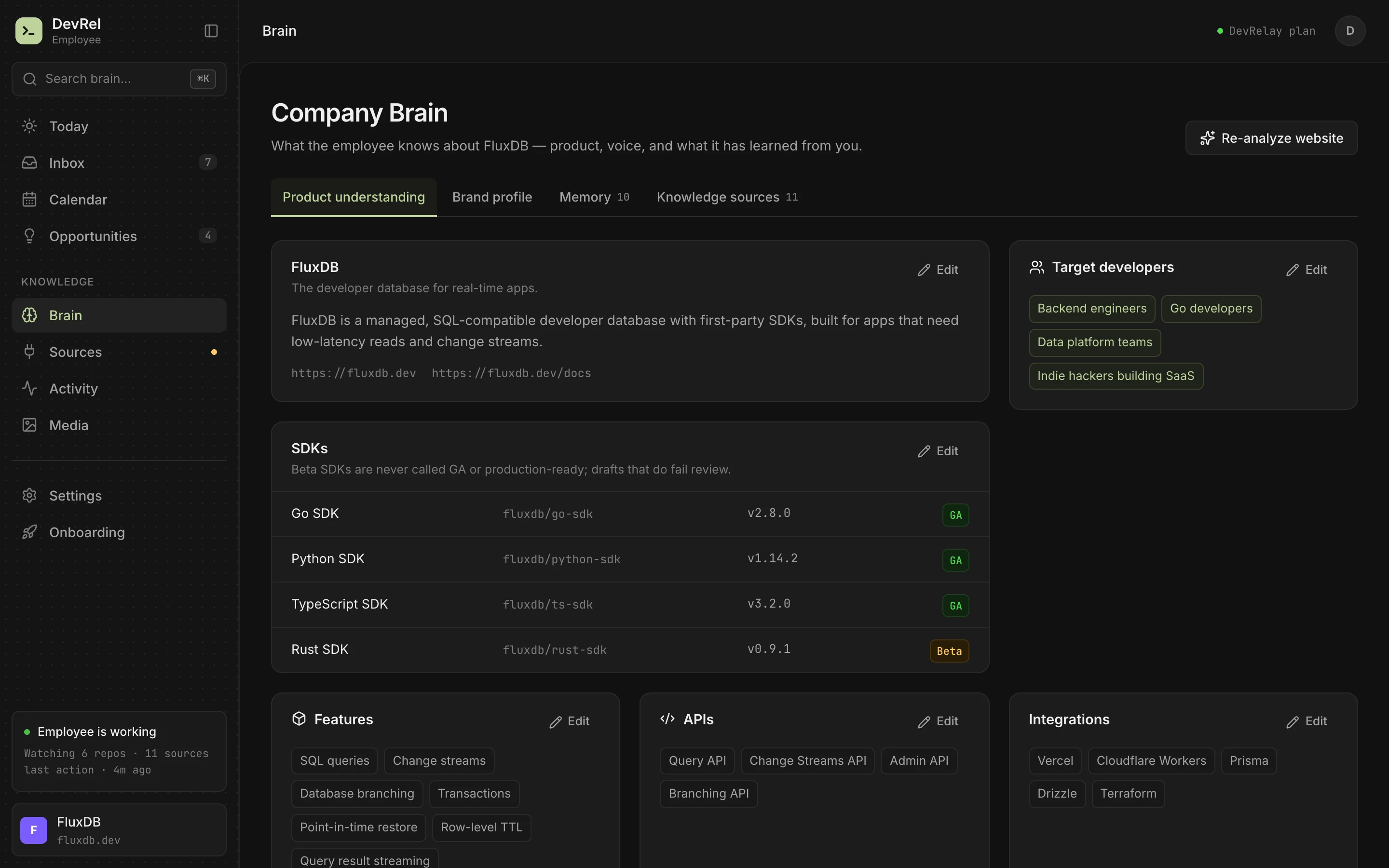
Questions about docs updates.
01Does it open a pull request on our docs repo?
Not yet. Docs updates come as a Markdown diff you export and apply. Export is on the DevRelay plan; on the free plan you can see and review every draft.
02Which docs platforms does it work with?
Any public docs site that serves its pages as HTML, which most static-site and hosted docs tools do. DevRelay doesn't run JavaScript when it crawls, so pages that only render in the browser can't be read. The output is Markdown.
03Can it read private or internal docs?
No. The crawler only fetches public http and https pages and refuses private, loopback and link-local addresses.
04How does it decide the docs are missing something?
A classifier compares the released change with what it found in your docs. When it's confident a guide already exists, no patch is drafted. When the change adds public API that isn't documented, one is.
05Where does the code example come from?
From the pull request that shipped the change, when it has one. The writer takes code from the evidence rather than making it up, and Go examples are parsed as part of the checks.
06Will it rewrite pages that already exist?
No. It drafts the missing section for a new change. Rewriting or restructuring existing pages is up to you.
Ship the feature and the docs for it in the same week.
Connect a repo and your docs site. The next release that outgrows your docs comes with the missing section, drafted and checked.
No credit card · Nothing posts without your approval