Tools That Turn GitHub PRs Into X and LinkedIn Posts
ShipPost, Merge & Tell, Shipstar, DevRelay and xpost compared: what starts a draft, what the AI reads, whether it posts for you, and what it costs.
The short answer
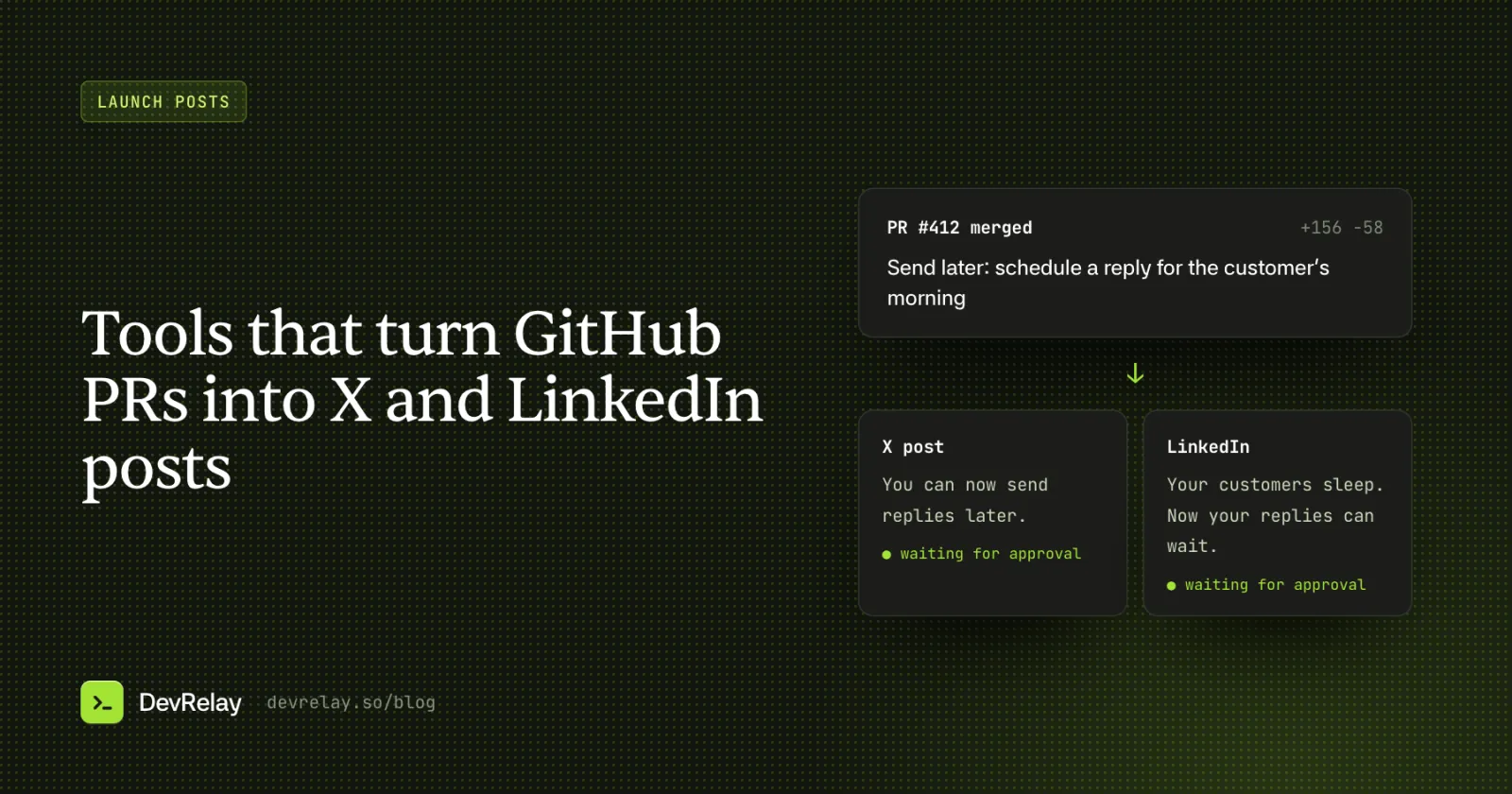
Yes. ShipPost writes X and LinkedIn posts from a merged PR you pick, free with your own API key. Merge & Tell and Shipstar draft a post for every merge and post it after you approve. DevRelay waits for the GitHub release, drafts posts only for changes users would notice, and posts the version you approve. xpost lets a coding agent publish the post through its MCP server.
Key takeaways
- Check what starts a draft: a merge, a push or a release. If you ship in releases, a merge trigger announces features that aren't out yet.
- A draft is only as specific as what the AI reads: a PR title, or the diff, description and linked issues.
- Most merges aren't worth a post; look for skip rules, priorities or roundups.
- On LinkedIn, check whether the tool posts as a person or a company page.
- Facts and prices were checked on each tool's own site on October 14, 2026.
Yes, there are tools that turn GitHub pull requests into X and LinkedIn posts, and they fall into three groups. Some read a pull request when you ask and hand you text to copy (ShipPost). Some watch your repository and draft a post for every merge, then post it once you approve (Merge & Tell, Shipstar). And some wait for the release, so a merged change that users can't use yet never gets announced (DevRelay). A fourth route skips the dedicated tool: ask a coding agent to write the post and publish it through a scheduler's MCP server (xpost).
This guide compares them, using facts and prices taken from each tool's own website on October 14, 2026. For each one it says what triggers a draft, what the AI reads, whether it posts for you, and what it costs. Prices change, so check the pricing page before you buy.
The tools at a glance
Prices are the lowest paid plan as shown on each tool's site on October 14, 2026, in US dollars.
| Tool | What starts a draft | What it reads | Networks | Posts for you | Free plan | Lowest paid price |
|---|---|---|---|---|---|---|
| ShipPost | You pick a merged PR (or paste a URL) | PR title, description, labels, diff stats | X, LinkedIn | No, you copy and post | Free, bring your own Anthropic API key | None |
| Merge & Tell | Every merged PR | The merged diff | X, LinkedIn, Bluesky, Mastodon, Threads, Discord, Slack and more | Yes, after approval (or automatically, if you allow it) | Yes, 1 repo, 10 merged PRs and 25 drafts a month | $29/mo |
| Shipstar | A push to main, a merged PR or a tag | Diffs, commit messages, PR descriptions | X and LinkedIn (both in beta), plus changelog, blog, newsletter, Slack | Yes, drafts for review by default | Yes, 1 project, 1,000 credits a month | $20/mo billed yearly |
| DevRelay | A published GitHub release (or a merge into your release branch) | The release's PRs, diffs, linked issues and docs | X (posts and threads), LinkedIn | Yes, after approval of that exact version | Yes, drafts only | $999/mo |
| xpost | You ask your coding agent | Whatever you give the agent | 9 networks, including X and LinkedIn | Yes, through its MCP server | First post free, then a 7-day trial | $12/mo |
| Do it yourself | Whatever you wire up in CI | Whatever you send the model | Any with an API | Only if you build it | Your time | API costs |
What to look at before you pick one
Five questions separate these tools more than their feature lists do.
- What triggers a draft. A merge, a push, a tag or a release. A merged pull request isn't news until users can use it. If you deploy every merge, a merge trigger is fine. If you ship in releases, a tool that drafts on merge will announce features that aren't out yet, unless you remember to hold them.
- What the AI reads. A PR title alone gives you a reworded title. The diff, the description and linked issues give the model something to be specific about. Ask whether the tool checks the draft against that evidence or just summarizes it.
- Who the post speaks to. A post about a refactor that cut a query from 40 to 12 is interesting to developers following your work. Customers of a SaaS product want to hear what they can now do. Tools built for build-in-public posts (ShipPost) write the first kind; tools built for product marketing (Merge & Tell, Shipstar, DevRelay) aim for the second.
- What it skips. Most merges aren't worth a post: dependency bumps, lockfiles, internal refactors. Look for skip rules, priorities, or a way to roll small changes into one post.
- Whose account it posts from. A personal profile or a company page. On LinkedIn this matters: several tools post as the member who connected the account, which is a personal profile.
ShipPost
ShipPost is a free web app for developers who want to post about their own work. You sign in with GitHub, add your Anthropic API key, scan your recent merged pull requests and pick one worth talking about. It reads the title, description, diff stats and labels and writes variations for LinkedIn and X, each with its own tone presets, and you can edit the prompts. It also has a URL mode for posts about something you found. It doesn't post: you copy the text and post it yourself. ShipPost is free; you pay Anthropic for the model calls.
Pick it if you're an individual developer who wants help writing about a PR now and then, in your own voice, for no subscription.
Merge & Tell
Merge & Tell watches your merged GitHub pull requests. When one merges, a webhook fires, Claude reads the changed lines, and it drafts the changelog entry and a post for each connected network. You review, edit and approve, and it posts to the accounts you connect; you can also let a network, or a weekly digest, publish on its own. Skip labels and path rules in a .marketing.yml file keep bots and lockfiles out, and small PRs can wait to be batched into a roundup. One merge can go out twice, from the company account and from a founder's, and copy written as a person never auto-publishes. Its pricing page lists X, Bluesky, Mastodon, LinkedIn, Threads, Discord, Slack, WordPress, a newsletter and a changelog.
The free plan doesn't expire: one repository, two connected accounts, 25 drafts and 10 merged PRs a month. Starter is $29 a month for one repository and 40 drafts, with higher plans for teams.
Pick it if you deploy what you merge, and want a post drafted from every meaningful merge across many networks.
Shipstar
Shipstar is automated product marketing for developers. It connects to GitHub through webhooks, and a push to main, a merged PR or a tag starts it: it reads the diffs, commit messages and PR descriptions and generates changelogs, release notes, social posts, blog posts and newsletters. Drafts wait for review by default, and you can turn on auto-publish per channel. It also hosts a changelog page and an announcement banner for your site. X and LinkedIn are marked beta on its site; Discord, Product Hunt and Hacker News are listed as coming soon.
Pricing is in credits: a social post costs 25, a blog post 100. The free plan has one project and 1,000 credits a month. Solo is $20 a month billed yearly ($240 a year) with 50,000 credits, X and LinkedIn auto-posts and blog posts, after a 14-day trial; Team is $24 per user a month billed yearly.
Pick it if you want one tool for the changelog, blog, newsletter and social posts, at a low price, and you're fine with social posting in beta.
DevRelay
DevRelay is our product, so read this one with that in mind. It watches your GitHub, but it doesn't draft a post when a pull request merges. It holds merged changes until a GitHub release ships them, or until they merge into your release branch if you deploy from one. Then it reads what the release ships: each pull request's diff, description, linked issues and your docs. It decides which changes users would notice, and only those get posts. A high-priority change gets an X post and a LinkedIn post, a medium one an X post, and a low one goes in the changelog only. A release with several notable changes gets one thread and one LinkedIn post for the whole release, and only a high-priority change keeps an X post of its own. Security-sensitive changes are held for a person.
Every claim in a draft is checked against that evidence before you see it, and a draft that names a number or feature the change doesn't contain fails. When you approve a draft, it posts to X (threads go out as a reply chain) or LinkedIn, now or at the time you pick. Approval covers that exact version: edit it, and it needs approving again. LinkedIn posts go out as the member who connected the account; company pages aren't supported yet. The same release also gets a changelog entry, a docs update and, on the paid plan, a launch image that goes out with the posts once you approve it. The posting side is described in full on release announcement posts.
The free plan drafts and reviews; posting, scheduling and images are on the $999-a-month DevRelay plan. That price is for a team replacing work a DevRel or marketing hire would do every release, not for one person's side project.
Pick it if you ship in releases, write for a product's users rather than other developers, and want the posts, changelog and docs drafted from the same evidence.
xpost
xpost is a social media scheduler for nine networks, including X and LinkedIn, with an MCP server. Add it to GitHub Copilot, Claude Code or another agent, sign in once, and ask the agent in plain language: its Copilot page suggests prompts like turning your GitHub release notes into social posts. The agent writes the post from whatever you put in front of it, and xpost publishes or schedules it. It doesn't watch your repository or decide what's worth announcing. Starter is $12 a month for one connected account; your first post is free, then there's a 7-day trial.
Pick it if you already work in a coding agent and want to say "post about this release" without leaving it.
Doing it yourself
You can build this with a GitHub Actions workflow that runs on release: published, collects the merged PRs, sends them to a model with your instructions, and posts through each network's API or a scheduler's. It costs only API calls and gives you full control. It also leaves you with everything the tools above handle: deciding which changes deserve a post, keeping invented details out, storing tokens, retrying failures without double-posting, and building a review step so nothing goes out unread.
A middle way for an occasional post: paste a PR into the free PR to tweet or PR to LinkedIn post tool and edit the result. Neither needs an account or GitHub access.
How to choose
| Your situation | Start with |
|---|---|
| You want to post about your own PRs now and then, free | ShipPost, or the free paste tools |
| You deploy every merge and want posts on many networks | Merge & Tell |
| You want changelog, blog, newsletter and social from one cheap tool | Shipstar |
| You ship in releases and announce to a product's users | DevRelay |
| You work in Copilot or Claude Code and want to post from there | xpost |
| You want full control and have time to build it | A GitHub Actions workflow |
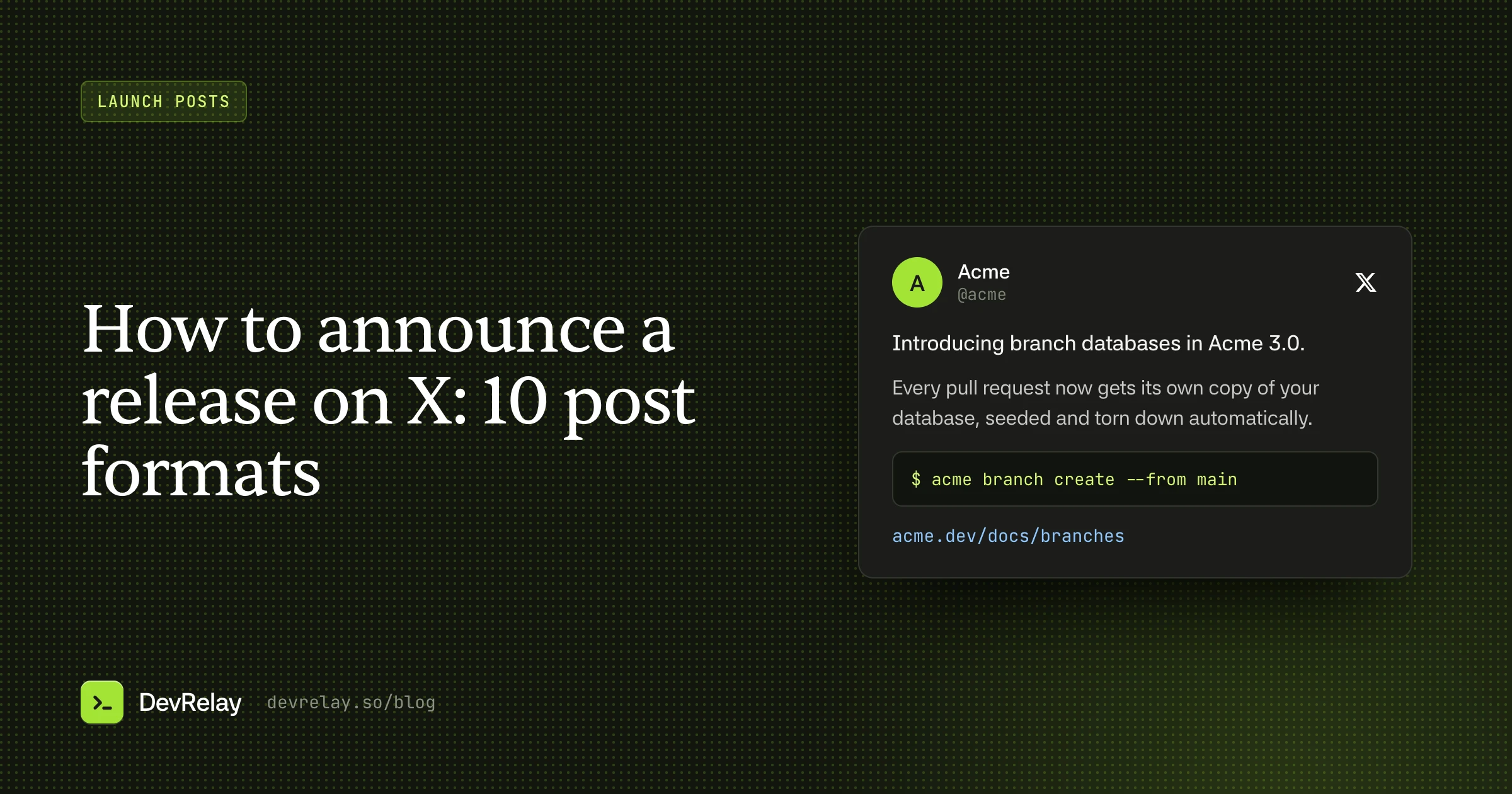
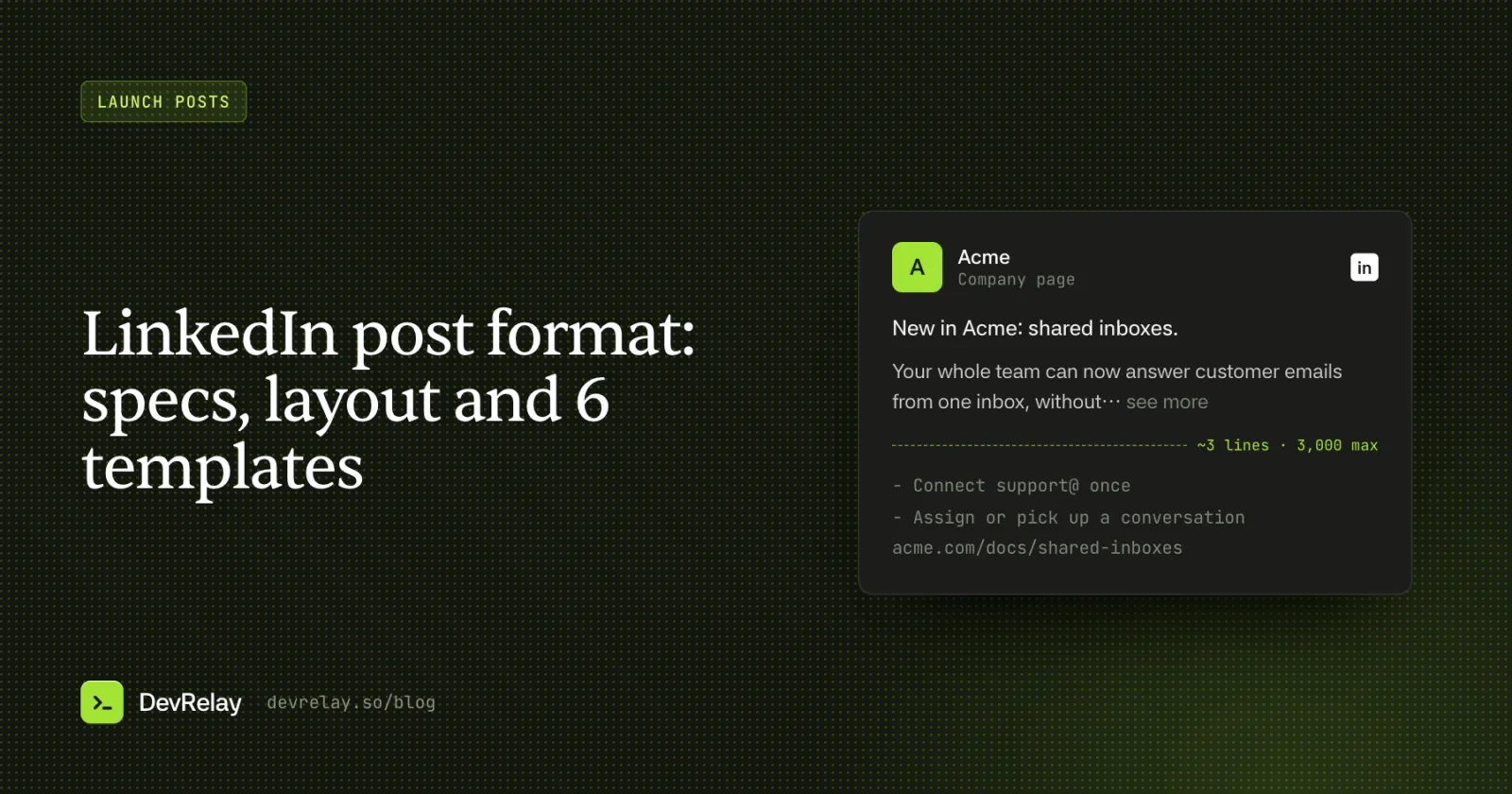
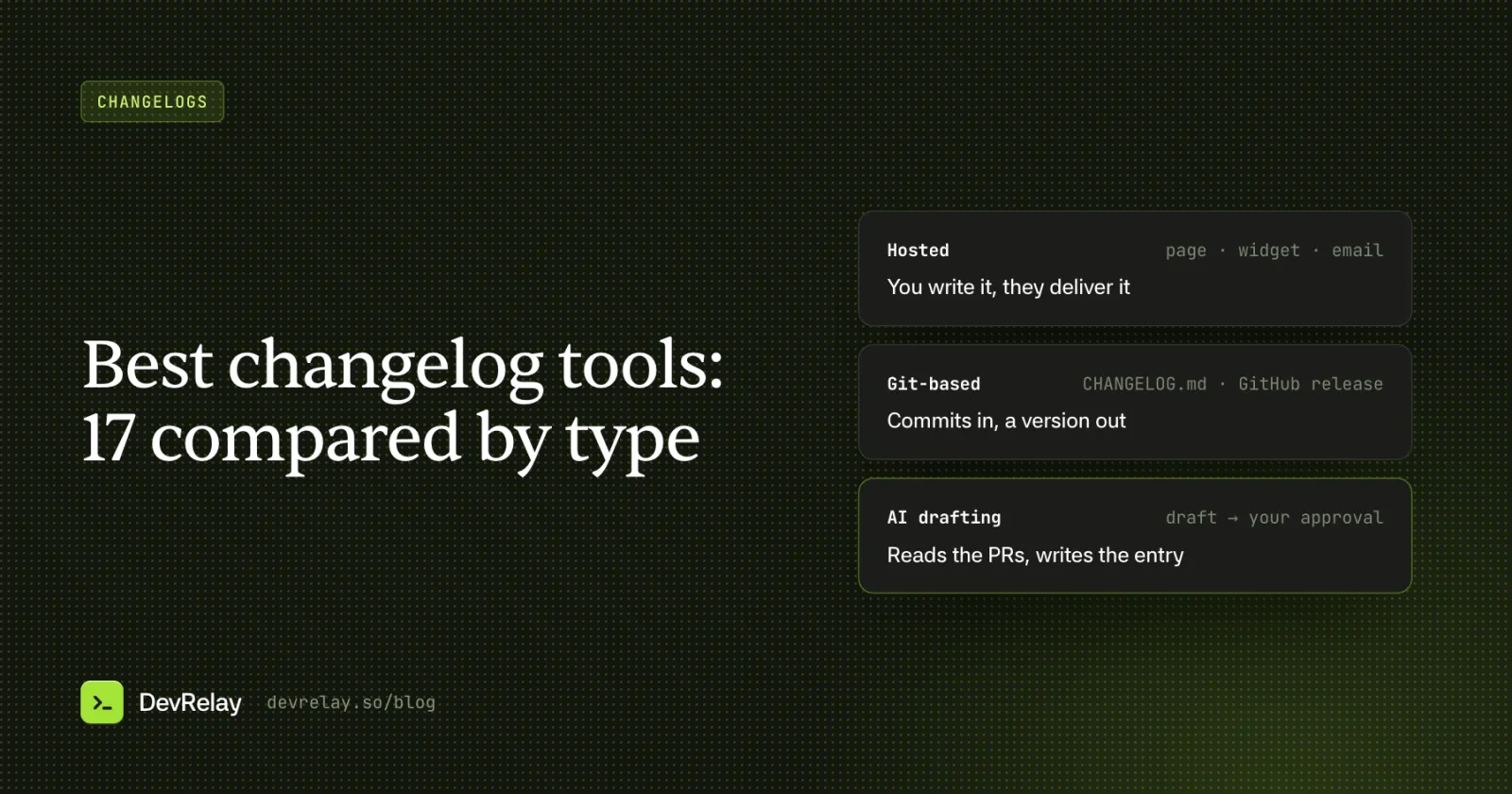
Whichever you pick, the post still has to be a good post. Our guides on how to announce a release on X and the LinkedIn post format cover the formats that work for each kind of change, and the best changelog tools compares tools for the changelog that sits behind the posts.
How DevRelay does it
DevRelay starts from the release, not the merge. When a GitHub release ships, it collects the pull requests in it, decides which changes users would notice, picks a post format that fits each change (a bug fix doesn't read like a launch), and drafts the posts in your brand's voice. Each draft lands in an approval inbox with its checks and the evidence behind every claim. Approve it, and it posts to your connected X or LinkedIn account, now or on the calendar.
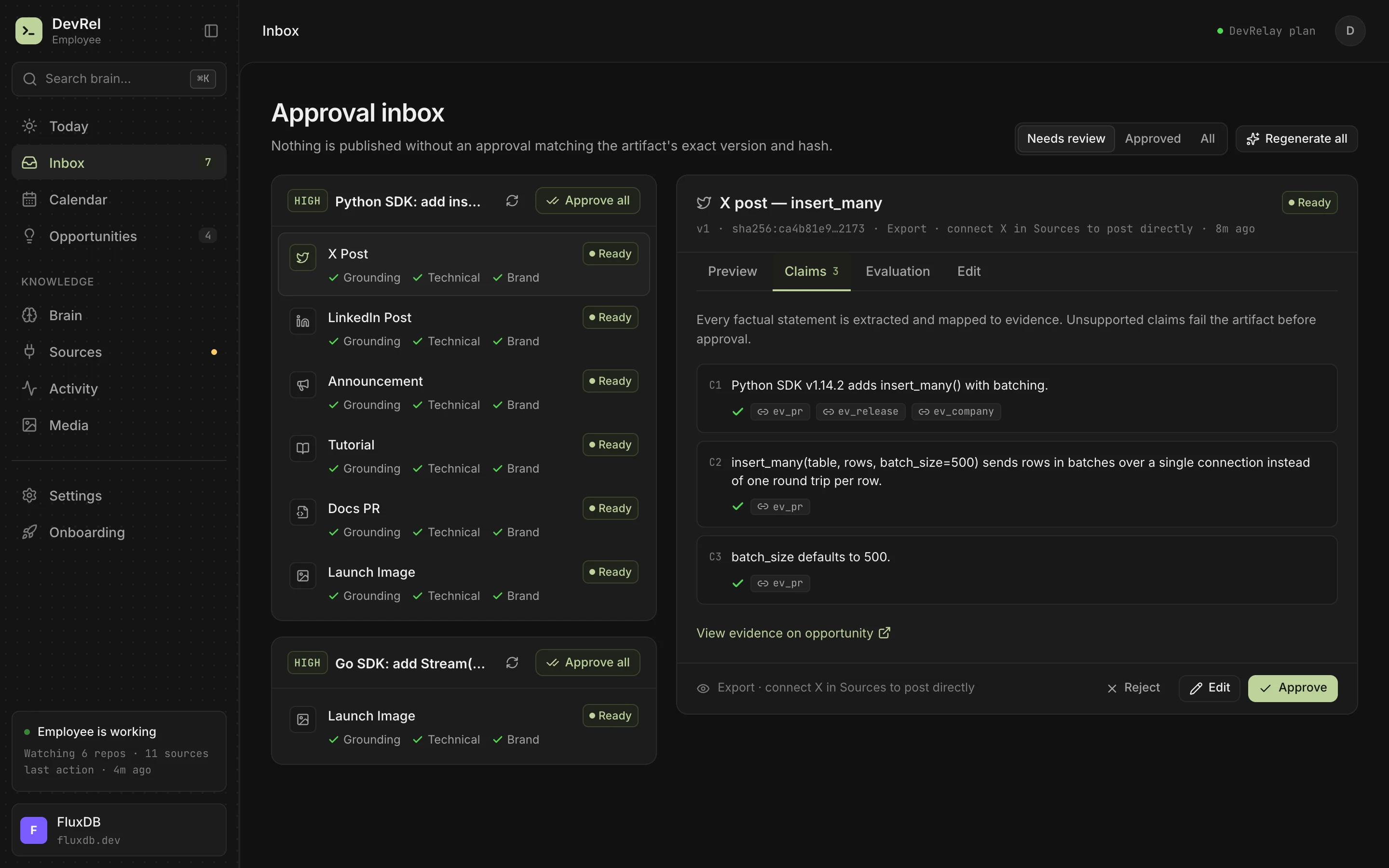
The free plan lets you connect a repository and see the drafts for your next release before you decide on anything else.
Frequently asked questions
Is there a tool that turns GitHub pull requests into X and LinkedIn posts?
Yes. ShipPost, Merge & Tell, Shipstar and DevRelay all draft X and LinkedIn posts from GitHub pull requests. ShipPost hands you text to copy; Merge & Tell and Shipstar post after you approve a draft made on merge; DevRelay waits for the release and posts the version you approve.
Is there a free tool to turn a PR into a tweet?
Yes. ShipPost is free if you bring your own Anthropic API key, Merge & Tell and Shipstar have free plans with monthly limits, and DevRelay's free PR to tweet and PR to LinkedIn post tools write a post from a pasted pull request without an account.
Should I post about every merged pull request?
No. Dependency bumps, refactors and internal fixes aren't news to your users, and a feed of them trains people to scroll past. Post about changes users can use, and roll small ones into a weekly roundup or the changelog.
Can these tools post to a LinkedIn company page?
It varies. Shipstar describes its LinkedIn posts as updates for your company page. DevRelay posts as the LinkedIn member who connected the account, a personal profile, and doesn't support company pages yet. Check the tool's docs before you rely on it.
Will an AI-written launch post get facts wrong?
It can, if the model only sees a PR title or invents a number. Pick a tool that reads the diff and description, and check that a person approves every post before it goes out. DevRelay also checks each claim against the evidence and fails drafts with numbers or features the change doesn't contain.